
Op. 33: Valse caprice
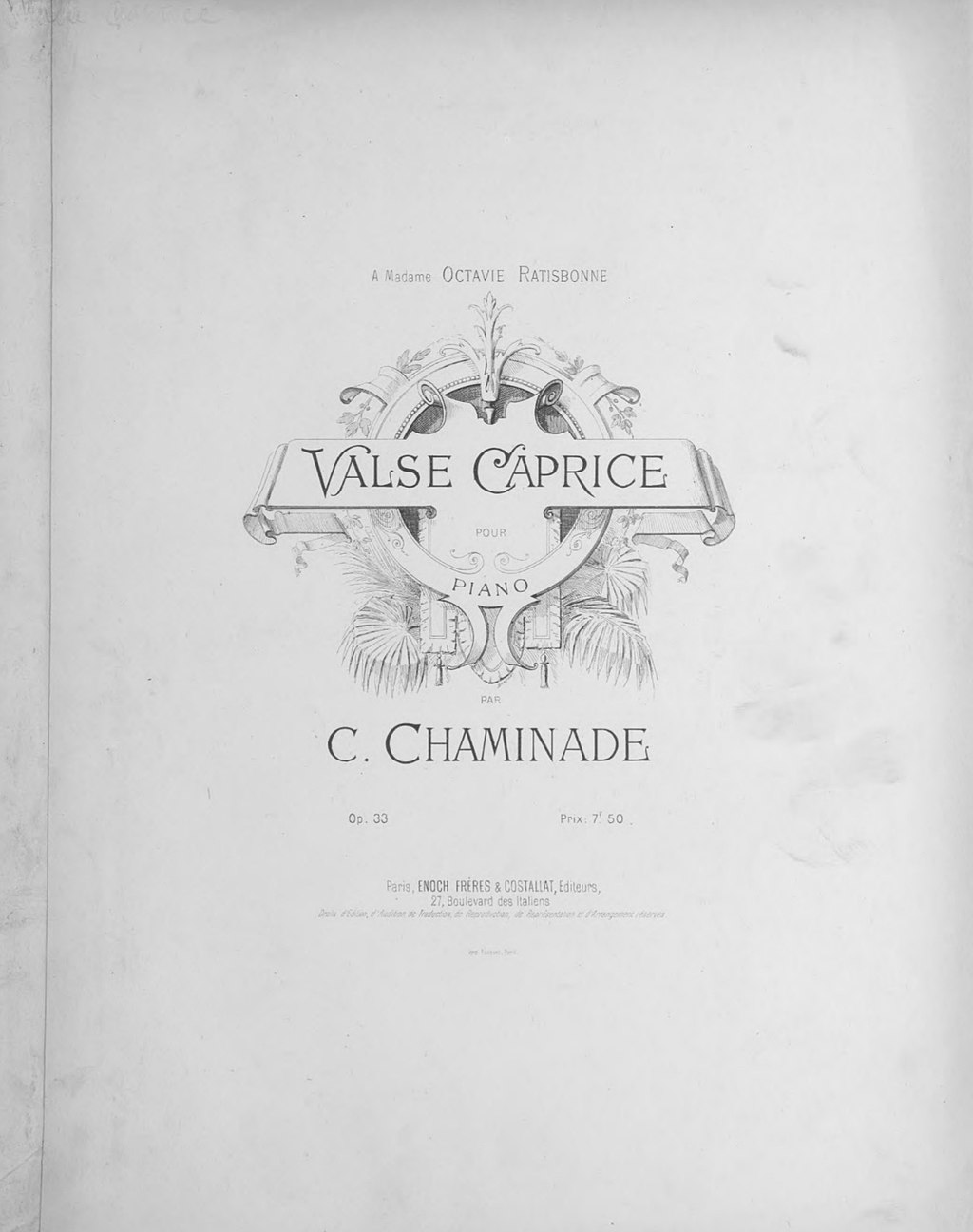
Dedicated to Octavie Ratisbonne. The piece follows a traditional waltz form, featuring a lively and rhythmic theme complemented by contrasting lyrical sections.(Enoch plate 1129). Transcribed to piano four hands by Charles Steiger in 1897 (Enoch 3320).
“Valse Caprice,” like all modern valses, is a caprice more than a valse; its lively three-quarter rhythm is the sole justification of its title. The beginning should be attacked boldly, and the jangling fifths, which seem a little harsh to some ears, ought to be well marked, the crescendo very pronounced, and the organ-point well sustained. The quick movement, which follows, clearly outlined, ought to be kept spirited in character, yet played in a flowing style. This little piece, being brilliant in its nature, one should guard against too much petty nuance lest it becomes wearisome. Chaminade, Cécile. “How to Play My Best Known Pieces.” The Etude 26 (December 1908): 759–760.
Transcription
Piano four hands: by Charles Steiger in 1897 (Enoch 3320).