
Op. 127: Poème Provençal
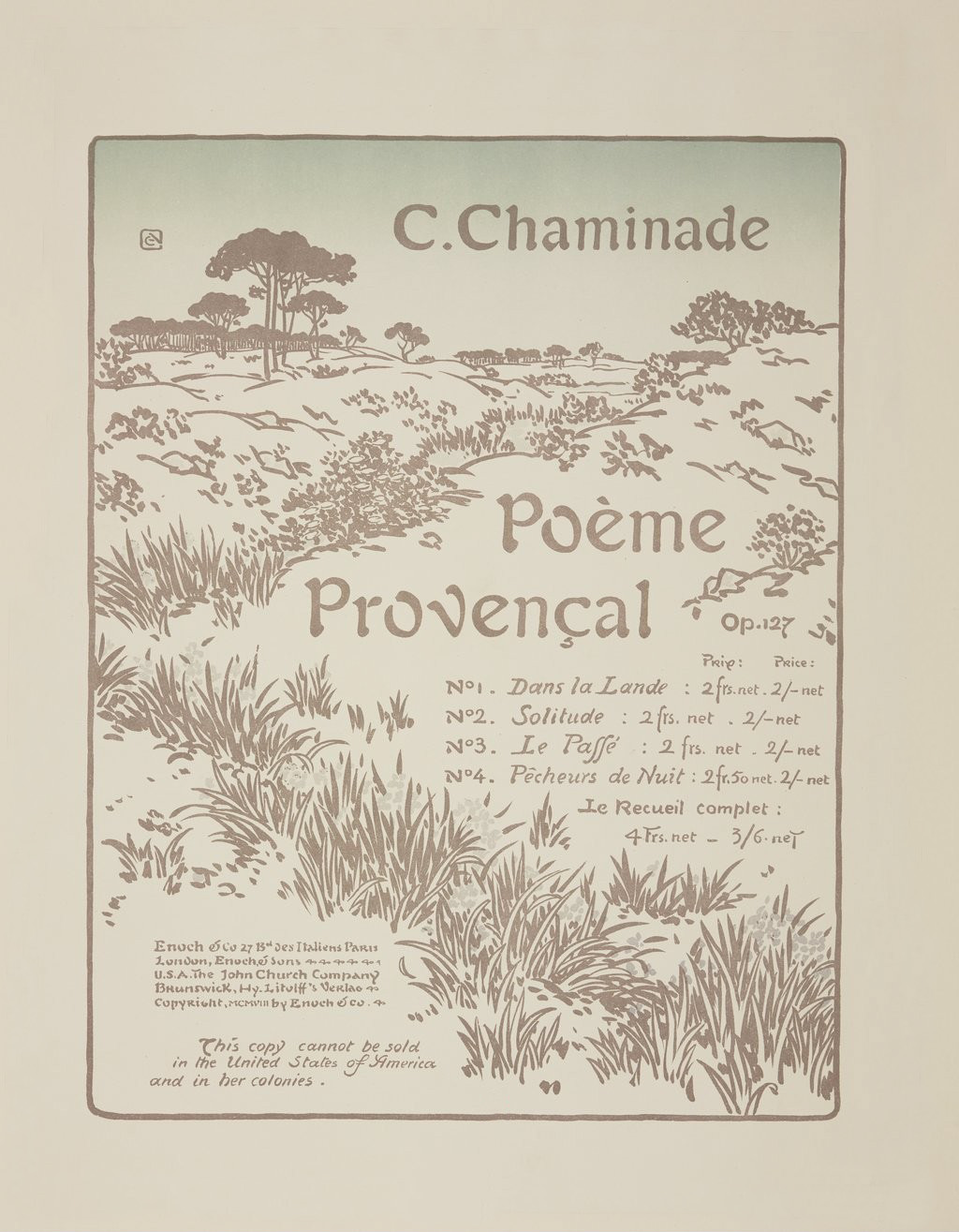
1. Dans la Lande
2. Solitude
3. Le Passé
4. Les Pêcheurs de Nuit
Enoch plate 6765-68. A four-movement piano suite that celebrates the landscapes and spirit of southern France. From rustic shepherd songs and spacious heathlands to tender idylls, sparkling fountains, and radiant morning songs, each piece captures a different facet of Provençal life.
The “Poeme Provencal” is also an awakener of tender recollections; written in a sunny land, it is none the less melancholy. This beautiful land of eternally clear skies and eternally green landscapes affords the writer more food for thought and contemplation than any other country. The first number is suggestive of a rustic land, poor but flower-adorned, and sweet-scented, which invites reverie and awakens regret. No. 2 is a lonely walk among a forest of firs; within sound of the sea, the sleep-laden trees seem to murmur sadly. The third number, “La Passe,” is not easy to describe; it is an awakening of old memories, of old regrets and bygone tears. The composer has used some old melodies which may perhaps be recognized. No. 4, “Pecheurs de Nuit,” is deep-sea fishing, with the aid of lanterns, on a dark, starless, moonless night. The sea is dangerous, the fish scarce and the fishermen wretched; it is a strange, sad fishing, that fishing by the light of a lantern!
There is still something to be said on the subject of these descriptive pieces. It is hoped that the little skeleton-sketches here suggested will serve to aid the imagination of the skilled musician, to whom the sensations and influences under which they were written have been revealed. It is not for children that these later pieces have been composed. In the short serenity of their lives there is no place for memories. These dream-pictures are for those who still regret the beautiful years of careless laughter and happiness; for those who arc acquainted with grief and who have memories; it is those, doubtless, who will best understand their inner meaning. (Chaminade, Cécile. “How to Play My Best Known Pieces.” The Etude 26 (December 1908): 759–760.)