
Op. 11: Piano Trio No.1 in G minor
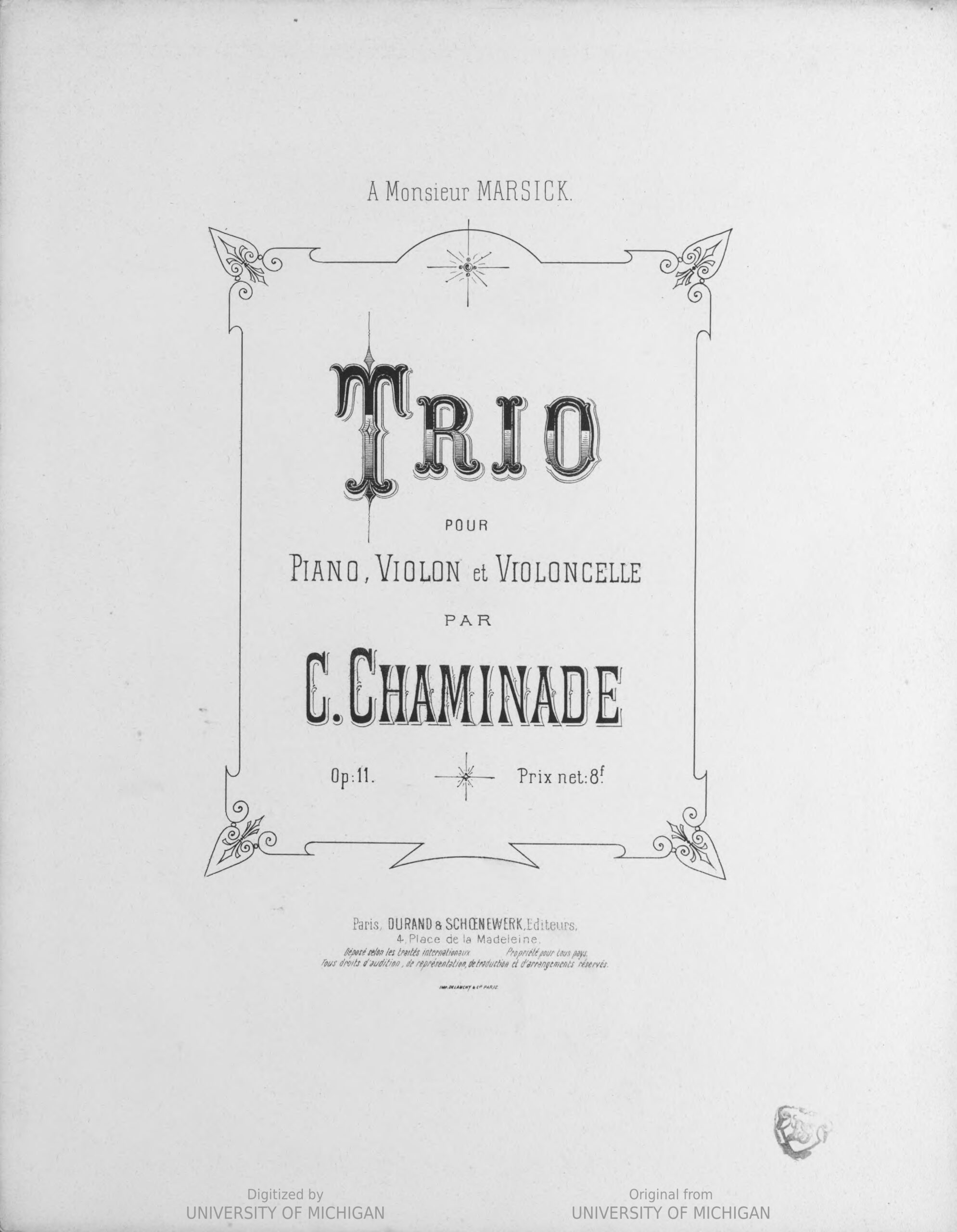
I. Allegro moderato II. Scherzo III. Andante IV. Finale
This piece was premiered on February 8, 1880, at the Salle Érard’s Sunday matinée. Chaminade was 22 years old and played the piano part, alongside Martin Marsick, violinist and Anton Hekking, cellist. The work was favorably received: according to Auguste Morel in Le Ménestrel, it was written “with an already firm and confident hand, revealing profound and abundant knowledge”. But Denis Magnus, critic for Gil Blas, commenting on the third movement, which particularly caught his attention, wrote: “The Scherzo especially is notable for its original shape; it is deliberately personal, quite square-cut, and moreover exudes a freshness of ideas typical of a young lady.” As for Morel, he noted that “it almost sounded like a fantasia for piano rather than a chamber music piece”.
The Trio is based on classical forms (ABA’ for the Andante, sonata form for the first and last movements), it makes use of clear textures, and a light, yet virtuoso writing, especially in the piano part. The bold modulations (particularly in the finale, which visits F sharp major and E major). The Allegro, intermezzo-like; the lyrical Andante; and a Finale in the style of a divertissement.The piece shows the influence of both French elegance and Germanic tradition